WELCOME TO FOOD 4 FAMILIES PROJECT -HEALTH PRODUCTS
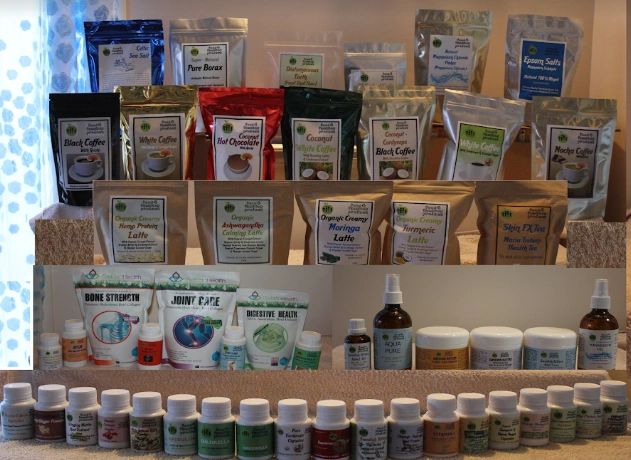
We at Food 4 Families Project.com believe the best way to distribute ethical and organic health food products to the public, is sell direct online,or at weekend markets at the lowest possible price. That's right, cut out the middleman, cut out the inflated high prices being charged by networking companies and make health products available to everyone at the lowest possible prices.
Our mission statement is to provide you with the best natural and organic products, in particular our own brand of Food4Families Project products, that can help you take your health to the next level.

Dear Friends
Hypothyroidism: Is a condition that can affect your entire body.
It is far more than just an underactive thyroid—it is a systemic disorder that impacts every cell, tissue, and organ in the body.
The thyroid gland produces hormones (primarily T3 and T4) that regulate metabolism, energy production, and overall cellular function. When these hormones are deficient, the body’s metabolic rate slows, leading to widespread dysfunction across multiple systems.
Unfortunately, many of its symptoms are often mistaken for the effects of aging, stress, or other health conditions, leading to misdiagnosis and prolonged suffering.
Considering thyroid issues affect 30-40% of the population and has done so for decades, you would think a thyroid test would be standard with every blood test.
EASTER SUNDAY 2020 — THE DAY EVERYTHING CHANGED
On Easter Sunday 2020, while operating my health and wellness stall at the Mt Gravatt Markets in Brisbane, I suffered a cardiac arrest.
My heart stopped.
My wife and friend, Patsy, placed the contents of three cayenne pepper capsules under my tongue and started applying CPR.
Fortunately, Claire, an off-duty nurse was present and coordinated the CPR until the paramedics arrived.
I left the Mt Gravatt Markets in a serious condition and arrived 20 minutes later at the Princess Alexandra Hospital, where I was back to normal.
Investigations revealed that my cardiac arrest involved a serious electrical disturbance of the heart rather than blocked coronary arteries.
During my hospitalization, doctors also discovered that I had severe hypothyroidism, described to me as myxedema.
My thyroid-stimulating hormone (TSH) was approximately 88.
To put that into perspective, the normal laboratory reference range is approximately 0.3–5.0 mIU/L.
My thyroid was clearly not functioning as it should.
I came to understand my severe thyroid condition was a major contributor to my cardiac arrest.
MY THYROID JOURNEY — FOUR BLOOD TEST RESULTS THAT TELL THE STORY
Following my cardiac arrest, I made the decision to concentrate on supporting my thyroid function and my body's natural healing abilities.And I am immensely proud of where my health stands today.
My medical records now provide a particularly interesting picture of my thyroid journey.
August 2024 — My Thyroid Was Still Severely Underactive
On 13 August 2024, more than four years after my cardiac arrest, I underwent thyroid function testing at Princess Alexandra Hospital.
The results were:
* TSH: 127.68 mIU/L — extremely elevated
* Free T4: 2.7 pmol/L — very low
* Free T3: 2.3 pmol/L — low
These results showed that my hypothyroidism was still severe.
In fact, my TSH had risen above the 88 recorded during my 2020 hospitalization.
The pathology report revealed severe hypothyroidism, with my TSH levels reaching an extraordinarily high 88 and later 127 — far above the normal laboratory range, indicating a serious thyroid condition that could potentially become life-threatening.
This makes my subsequent blood test results particularly meaningful to me.
My Four TSH Readings — 2020 to 2026
Date TSH result Interpretation
Easter Sunday 2020 88 Severely elevated
13 August 2024 127.68 Extremely elevated
January 2025 9.3 Elevated, but substantially improved
September 2026 1.1 Within the normal laboratory range
Normal laboratory reference range: approximately 0.3–5.0 mIU/L.
These are not simply numbers to me.
They represent six years of dedication, patience, observation and commitment to improving my health.
My TSH was approximately 88 when I suffered my cardiac arrest in 2020.
By August 2024, it had risen to 127.68.
Then, in January 2025, my TSH had fallen to 9.3.
Finally, in September 2026, it had fallen further to 1.1 mIU/L.
The September 2026 pathology report described my result as euthyroid, meaning that my TSH was consistent with normal thyroid regulation at the time of testing. In other words, my thyroid, was back to normal
For me this has been a real blessing. Being able to turn my hypothyroidism around, from severe to normal, using natural supplements, and a protocol that helps assist all organs in the body, instead of relying on Thyroid stimulating hormone medicine, is quite an outstanding result.
It confirms what I already knew that Our own body is our greatest doctor and healer.
It knows us better than anyone else ever could — better than any doctor, specialist or machine.
Medications and supplements do not heal. They never have, and they never will.
They can assist, support and provide the body with the tools it needs, but ultimately, it is our own body that does the healing.
Our body has its own intelligence, its own priorities and its own timetable.
When we provide it with adequate nutrition, water, essential minerals and the right environment, we give it the opportunity to function, repair and restore itself. That is exactly what I have tried to do over six years, and it appears to have worked wonderfully well for me
We cannot force the body to heal. We can only support it and allow it to do what it knows best.
REMEMBER: OUR BODY IS OUR GREATEST DOCTOR AND HEALER. IT KNOWS US BETTER THAN ANYONE ELSE EVER COULD.
FROM A THYROID STIMULATING HORMONE (TSH) READING OF 127.68 IN AUGUST 2024 TO 1.1 IN SEPTEMBER 2026.
That represents a reduction of approximately 99.1% in just over two years.
It is a substantial improvement, documented through my medical blood test results.
WHAT DOES A TSH OF 1.1 ACTUALLY MEAN?
TSH stands for thyroid-stimulating hormone.
It is produced by the pituitary gland in the brain and acts as a signaling hormone, telling the thyroid gland to produce thyroid hormones.
When thyroid hormone production is inadequate, TSH usually rises as the pituitary gland attempts to stimulate the thyroid.
When thyroid hormone levels are sufficient, TSH generally returns towards its normal range.
My September 2026 result of 1.1 is therefore particularly encouraging.
It shows that my TSH level, which had previously been severely elevated, had returned to the normal laboratory range.
I consider this a remarkable achievement, particularly as I have followed a natural approach to supporting my thyroid health rather than taking prescribed thyroid medication (levothyroxine).
Many people diagnosed with hypothyroidism require lifelong medication, so seeing my TSH return to the normal range has been an especially encouraging milestone in my six-year health journey.
My August 2024 results also showed very low thyroid hormone levels. The September 2026 report measured TSH alone, so it does not establish whether my thyroid function has permanently recovered.
Nevertheless, these four TSH readings provide clear medical evidence of a remarkable improvement in my thyroid blood test results.
WHY THESE RESULTS MEAN SO MUCH TO ME
When I look back to Easter Sunday 2020, the day my heart suddenly stopped and I was subsequently diagnosed with severe hypothyroidism, I realize just how far I have come.
It was a life-changing experience that made me question many things about my health and the choices I would make moving forward.
Following my diagnosis, I was prescribed levothyroxine, a synthetic thyroid hormone commonly used to treat hypothyroidism.
However, when I investigated the medication, I became concerned about its potential cardiovascular side effects, particularly given that I had just survived a cardiac arrest.
The warnings included serious complications such as:
* Heart attack: Chest pain and shortness of breath.
* Heart failure: Breathlessness, extreme tiredness and reduced physical capacity.
* Irregular heart rhythm: Rapid or irregular heartbeat.
These potential risks concerned me enormously, especially after what I had just experienced.
I also discovered that levothyroxine treatment is often required for life, particularly when the thyroid gland can no longer produce sufficient hormones naturally.
For these two reasons, I made the personal decision not to take levothyroxine.
It was not a decision I made lightly. Having come so close to losing my life, I wanted to understand my condition and carefully consider the path I would take towards improving my health.
Today, more than six years later, when I look at my progress and compare my results with where I started in 2020, they mean far more to me than numbers on a pathology report.
They represent a journey that began on the day I was given another chance at life.
What I Mean by Healing my hypothyroidism Naturally
I wanted to heal my hypothyroidism naturally, without relying on prescribed medications or drugs. I wanted to do it, through a combination of hair mineral analysis testing, daily monitoring of my basal and metabolic temperatures, proper nutrition, essential minerals, maintaining body warmth, improving circulation, adequate hydration — including Celtic sea salt intake — following a balanced diet, getting quality sleep, managing stress, proper supplementation, and, importantly, careful daily observation and consistent record keeping.
Most importantly, I believe in looking at the body as a whole, rather than treating an individual organ or gland in isolation.
The thyroid does not function independently. It works in close cooperation with the pituitary gland, hypothalamus and many other systems throughout the body.
My approach has been to support these interconnected systems through proper nutrition, mineral balance, hydration, warmth, circulation, adequate sleep, stress management and careful daily observation.
My philosophy is simple: support the whole body, provide it with the building materials it needs, and create the best possible conditions for its natural healing processes to function.